
GVTAI -
Life Sciences Intelligence Engine
Transforming Life Sciences Knowledge into Human Vitality Intelligence
GVTAI is the life sciences intelligence engine of the GEViTY ecosystem.
It integrates biomedical research, biometric data, and cross-disciplinary scientific models to generate actionable insights into human resilience, vitality and long-term health trajectories.
Rather than analyzing isolated metrics, GVTAI models human vitality as a dynamic system shaped by biology, behavior, environment and social context.
GVTAI at a Glance
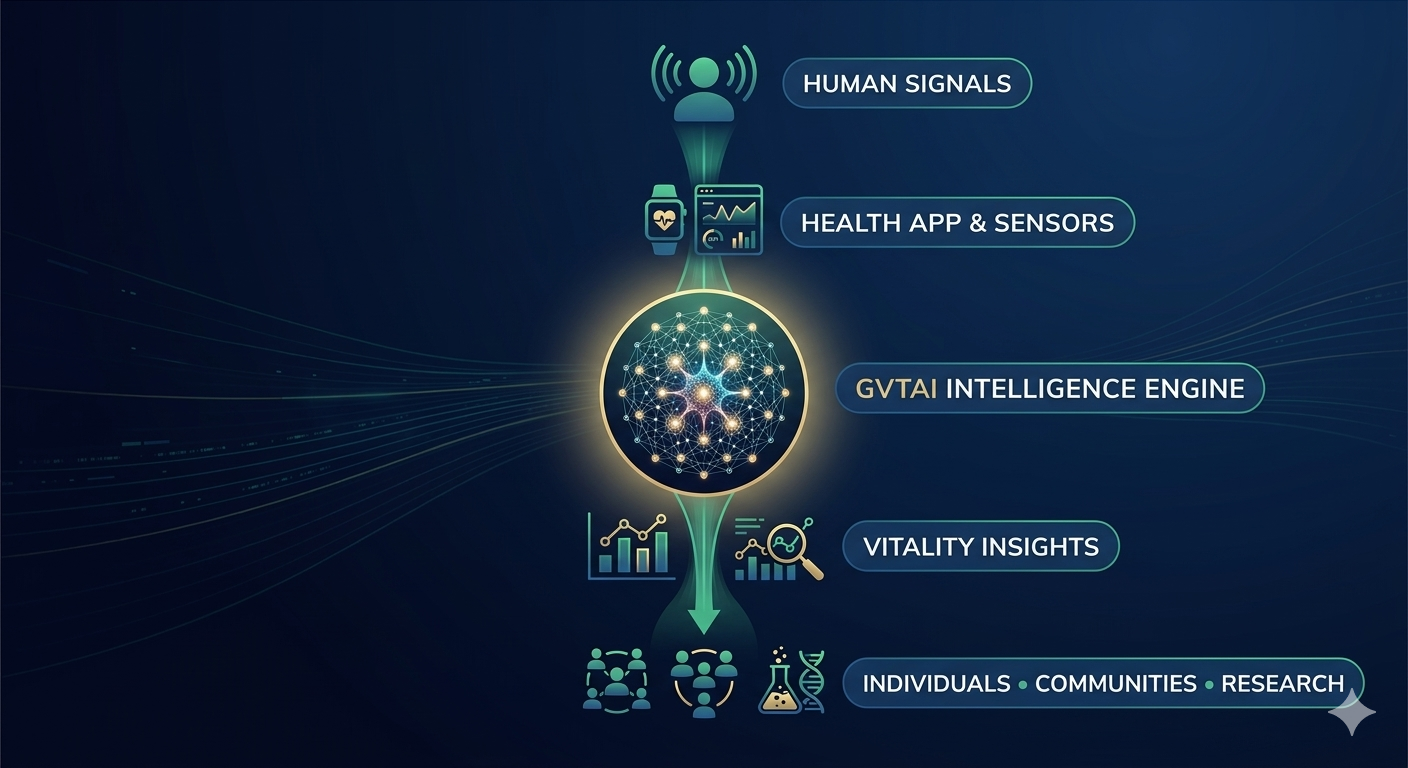
GVTAI — Life Sciences Intelligence
Integrating:
• medicine
• neuroscience
• epigenetics
• systems biology
• advanced analytics
• longitudinal health data
to generate insights into human vitality and resilience across time.
A New Intelligence Layer for Human Vitality
Modern healthcare systems are primarily designed around diagnosis and treatment of disease.
GVTAI introduces a different paradigm.
It focuses on understanding and optimizing human vitality systems over time.
By integrating insights from multiple scientific domains, GVTAI creates a cross-disciplinary intelligence layer capable of identifying patterns that traditional health analytics often miss.
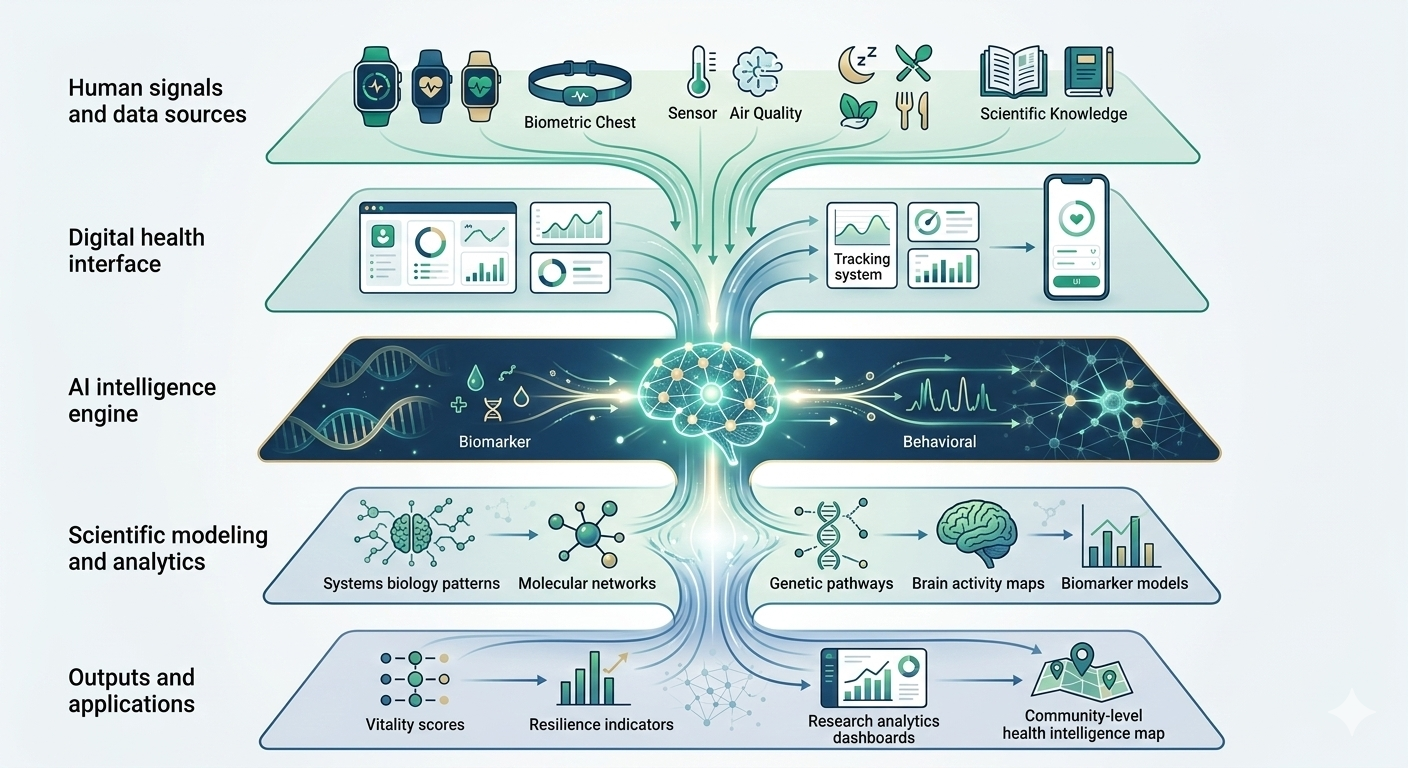
Cross-Disciplinary Life Sciences Intelligence
GVTAI integrates knowledge from multiple scientific domains, including:
• medicine and preventive healthcare
• neuroscience and nervous system regulation
• epigenetics and gene–environment interaction
• systems biology and metabolic networks
• mathematics and complex systems modeling
• quantum-inspired biological models
• validated traditional health practices
This cross-disciplinary approach enables a deeper understanding of how biological, psychological, and environmental systems interact to shape human vitality.
From Data to Vitality Intelligence
GVTAI transforms complex biological signals into meaningful insights.
It analyzes multiple data layers simultaneously:
• biometric signals from wearables and sensors
• longitudinal health and lifestyle data
• environmental and behavioral patterns
• scientific research and clinical knowledge bases
• community-level and population health insights
Through advanced analytical models, GVTAI identifies relationships between these signals to support evidence-based vitality strategies.
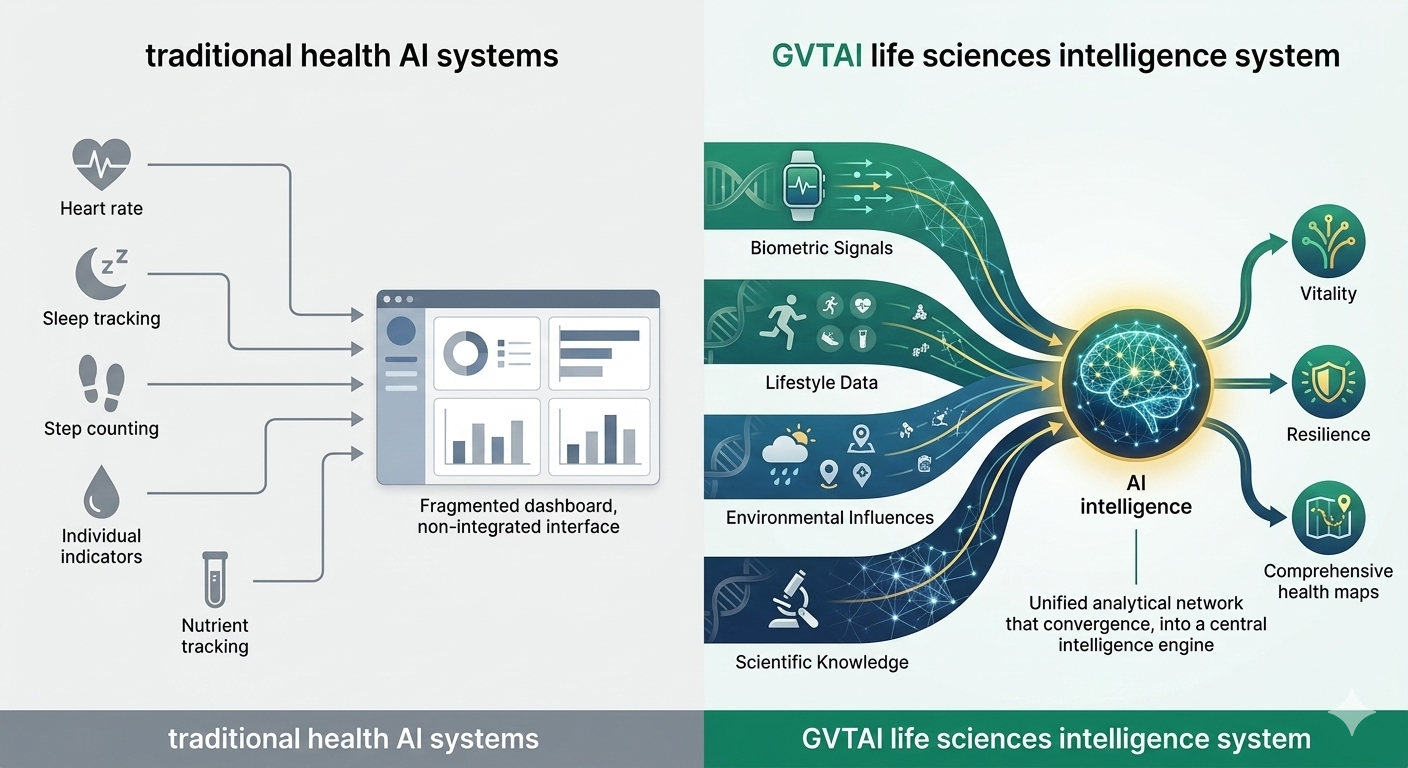
Human Health as a Dynamic System
Conventional health technologies often track isolated metrics.
GVTAI instead models interconnected biological systems, including:
• nervous system regulation
• metabolic and hormonal balance
• cognitive and emotional states
• environmental influences
• social and behavioral patterns
By analyzing these systems together, GVTAI enables a deeper understanding of human resilience and adaptive capacity.
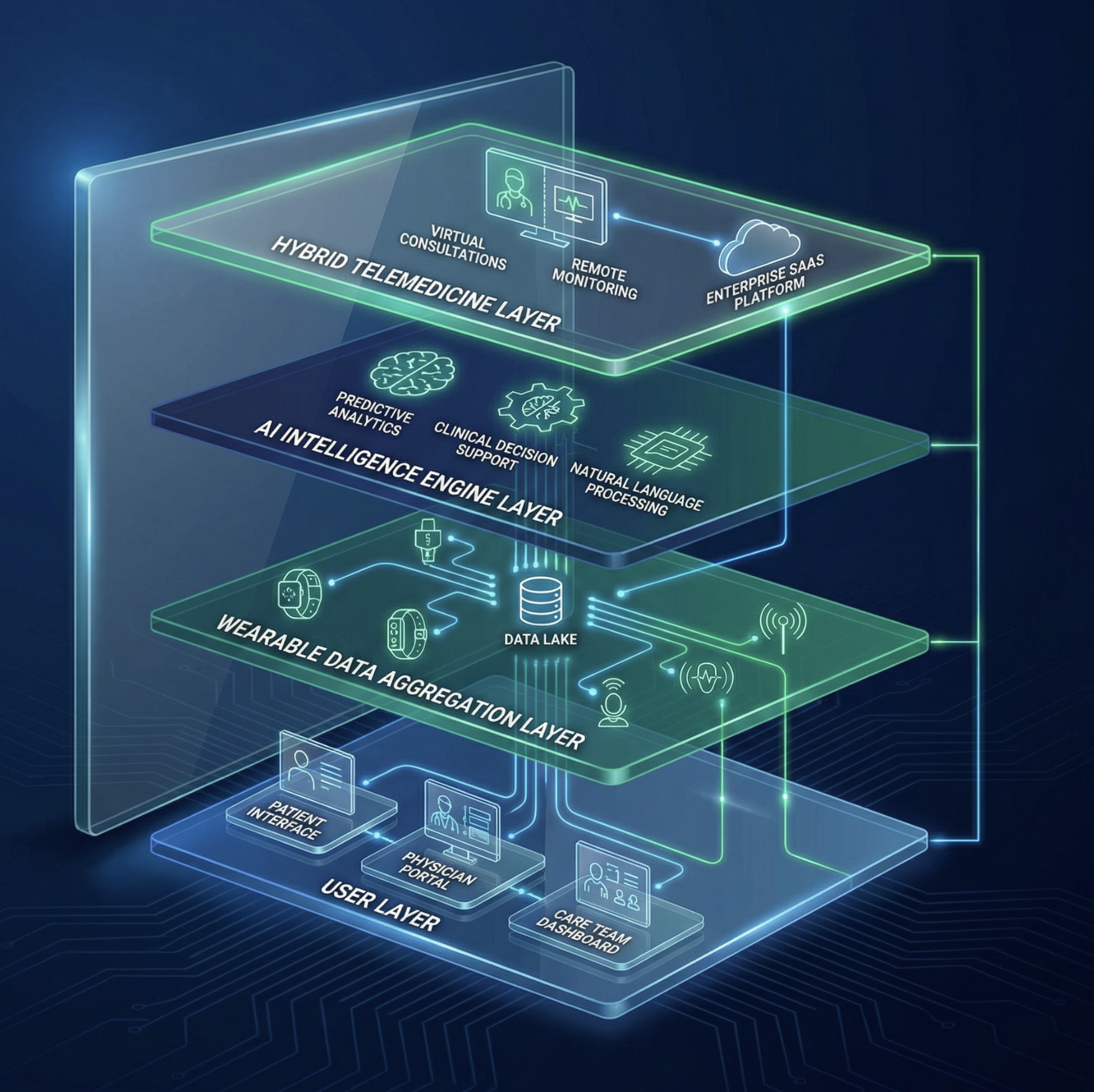
Integrated with the GEViTY Platform
GVTAI operates as the intelligence layer within the GEViTY platform architecture.
It supports multiple ecosystem components:
• GEViTY Health App and biometric monitoring
• resilience and longevity programs
• research collaboration and life sciences analysis
• educational platforms and knowledge translation
• community-level vitality initiatives
Through this integration, GVTAI translates scientific knowledge into practical insights for individuals, communities, and institutions.
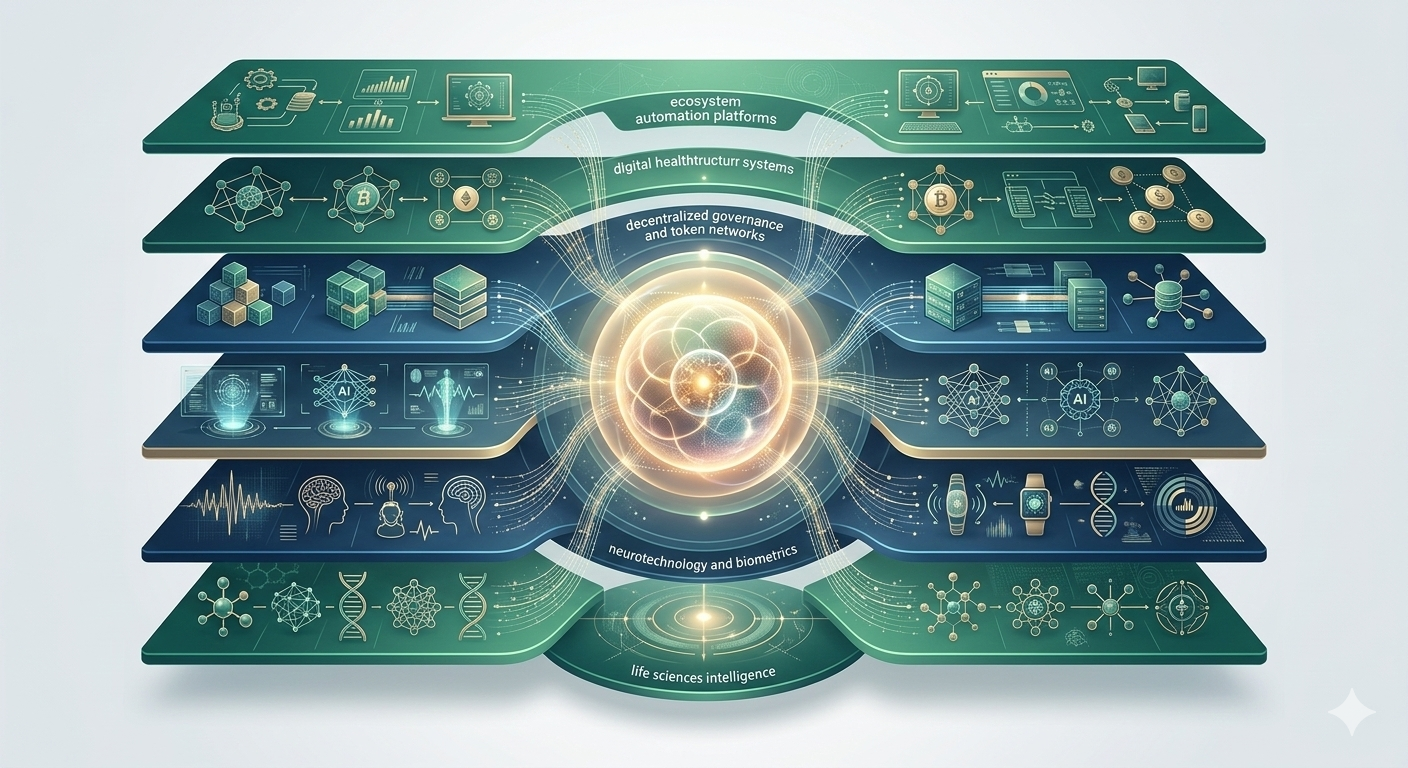

The Role of GVTAI in the GEViTY Ecosystem
GVTAI enables the GEViTY platform to evolve into a living intelligence system for human vitality.
It allows the ecosystem to:
• continuously learn from real-world data
• refine health and resilience protocols
• support evidence-based longevity strategies
• connect research insights with everyday practice
This intelligence layer transforms GEViTY from a static platform into an adaptive vitality ecosystem.
Toward a New Science of Human Vitality
GVTAI contributes to the development of a new scientific framework for understanding human health and vitality.
By integrating life sciences research, biometric data, and analytical intelligence, the system supports new approaches to:
• preventive health systems
• resilience science
• longevity research
• human performance optimization
• regenerative community design